
Multi-chamber culture insert for connected neuronal aggregates
The device developed will ensure 3-4 neuronal aggregates can interact and form connections with one another via ECM channels while in separate media.
Project Overview
Common devices used in biological research, including well plates and petri dishes, are readily accessible, provide easy platforms for addition of cells, media, and reagents, and allow for observation using standard laboratory microscopes; however, they fail in their ability to model the complex physiological environments of the human body. In recent decades, there has been a large push toward the development of microphysiological systems used for research, for example, the Organ-on-a-Chip platforms. The ability to model complex tissue environments is incredibly important for the study of the auditory pathway because of its dynamic environment. 2D systems completely isolate cells from the complex physical forces, specialized microenvironments, and 3D neural networks that are vital to the transduction of sound to the brain. The multi-chamber culture insert device provides a more dynamic platform to study the growth and interactions of neuronal cell bodies on a 3D platform. The device allows for growth and interaction of neuronal cell aggregates in a structured manner. The device separates a well plate chamber into distinct sections each holding a neuronal aggregate. The device allows for growth of neurons between chambers, but separates the media in each chamber, allowing for independent treatments of aggregates.
Team Picture
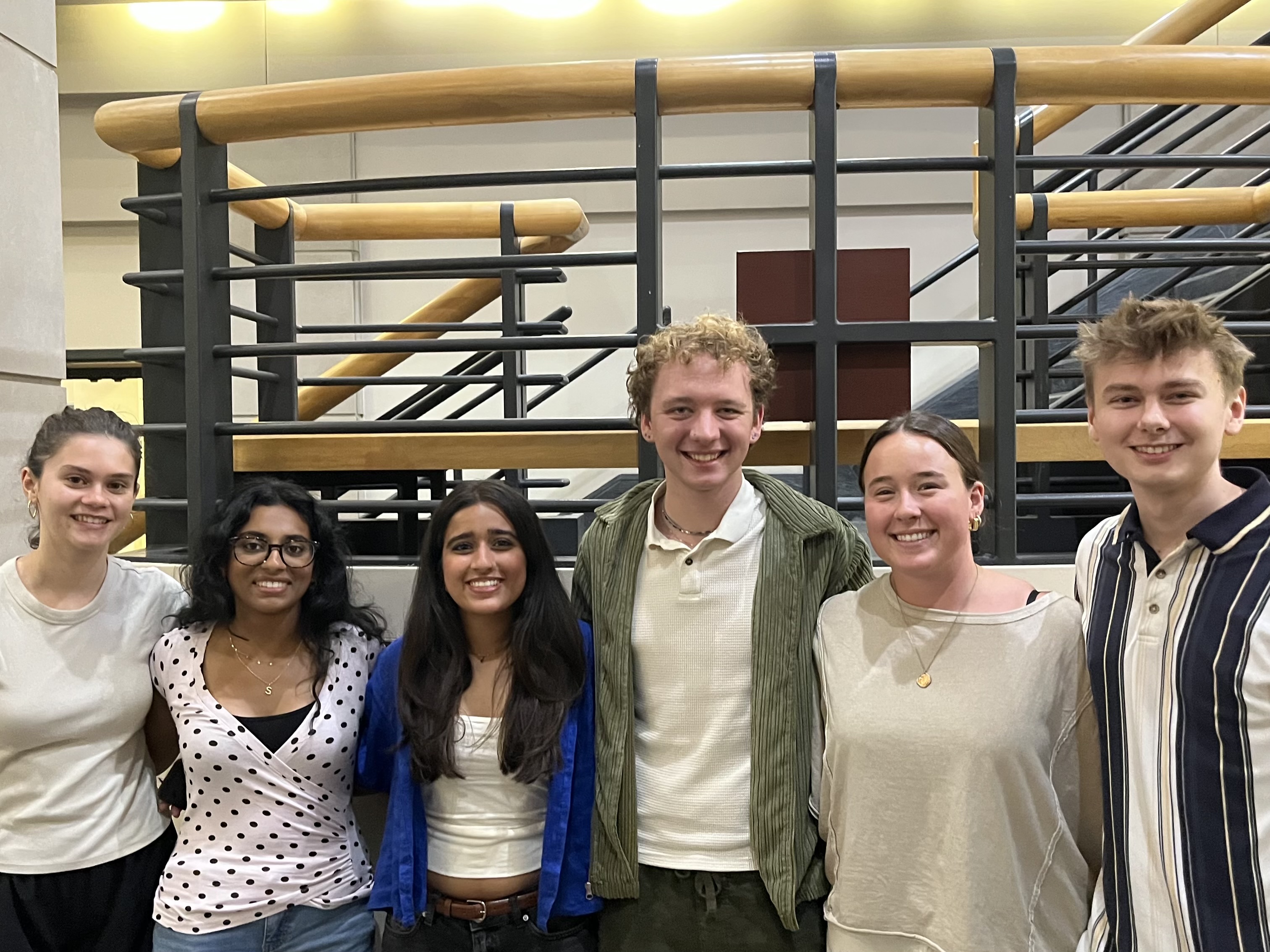
Files
- Preliminary Report (October 11, 2026)
- Preliminary Presentation (October 2, 2026)
- PDS (September 17, 2026)
Progress Reports
- Week 7 (October 22, 2026)
- Week 6 (October 15, 2026)
- Week 5 (October 8, 2026)
- Week 4 (October 1, 2026)
- Week 3 (September 24, 2026)
- Week 2 (September 17, 2026)
- Week 1 (September 10, 2026)
Contact Information
Team Members
- Greta Mahlke - Co-Team Leader
- Sam Brandt - Co-Team Leader
- Eli Von Holtum - Communicator
- Sri Krishnan - BSAC
- Sophia Mazer - BWIG
- Safia Syed - BPAG
Advisor and Client
- Prof. Mehmet Orman - Advisor
- Dr. Jason Brant - Client